The United States carried out a new round of military strikes against Iran on Monday, marking the second consecutive day of operations as tensions over the Strait of Hormuz continued to escalate. The renewed fighting has intensified concerns of a wider regional conflict and increased uncertainty in global energy markets.
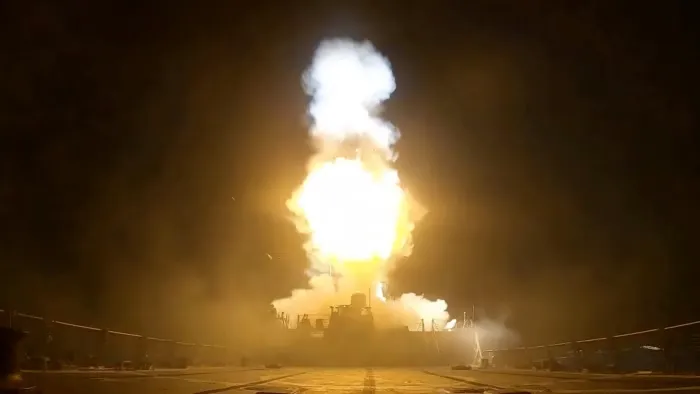
According to the US Central Command (CENTCOM), the latest operation targeted multiple military sites across Iran. The military said the strikes were aimed at reducing Iran’s ability to threaten commercial shipping and ensuring freedom of navigation through the strategically important Strait of Hormuz.
CENTCOM stated that the operation struck Iranian air defence systems, coastal radar installations, missile and drone launch facilities, and small naval vessels. The mission reportedly involved fighter aircraft, naval warships, and one-way attack drones launched from both air and sea.
US officials reiterated that the Strait of Hormuz remains an international waterway and pledged to continue protecting commercial shipping from potential threats.
Iranian state media reported that the strikes affected several locations in southern and western Iran, including Qeshm Island, Bandar Abbas, and parts of Khuzestan province. Officials also reported damage to infrastructure in Mahshahr, where one person was killed and four others were injured, according to local authorities.
In response, Iran’s Islamic Revolutionary Guard Corps (IRGC) announced retaliatory strikes against what it described as US military assets and facilities located in several Gulf countries, including Jordan, Bahrain, Kuwait, and Oman.
Iranian media claimed that missile and drone attacks targeted military bases, radar installations, and logistics facilities supporting American operations in the region. Iranian officials also stated that a US combat drone had been shot down near Bandar Abbas. These battlefield claims had not been independently verified at the time of reporting.
The IRGC maintained that reducing US military activity around the Strait of Hormuz was essential to restoring normal maritime traffic, warning that continued military operations could further destabilise one of the world’s busiest energy corridors.
Global oil markets reacted immediately to the renewed escalation. Crude oil prices rose sharply after futures trading opened, reflecting investor concerns over possible disruptions to international energy supplies passing through the Strait of Hormuz.
The latest military exchanges follow several days of escalating tensions. Reports indicated attacks on infrastructure near the Gulf, incidents involving commercial shipping, and competing claims over the operational status of the Strait of Hormuz. While Iran declared the waterway closed, US officials insisted that commercial navigation remained open, although shipping activity had slowed significantly.
Diplomatic efforts to contain the crisis are continuing despite the escalation. Pakistan and several regional partners remain engaged in mediation aimed at restoring dialogue between Washington and Tehran.
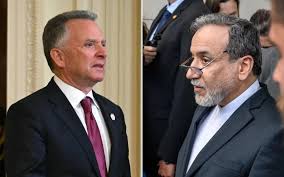
Pakistan’s Deputy Prime Minister and Foreign Minister Ishaq Dar reportedly held discussions with Iranian Foreign Minister Abbas Araghchi, stressing that diplomacy remains the only sustainable path to regional peace.
United Nations Secretary-General António Guterres also called for an immediate end to hostilities, urging all parties to exercise maximum restraint and avoid actions that could further destabilise the region.
Although diplomatic channels remain active, the latest exchange of military action highlights the growing challenges facing efforts to restore stability. With tensions centred on the Strait of Hormuz—a critical route for global oil exports—the international community continues to monitor developments closely amid fears of a broader regional conflict.