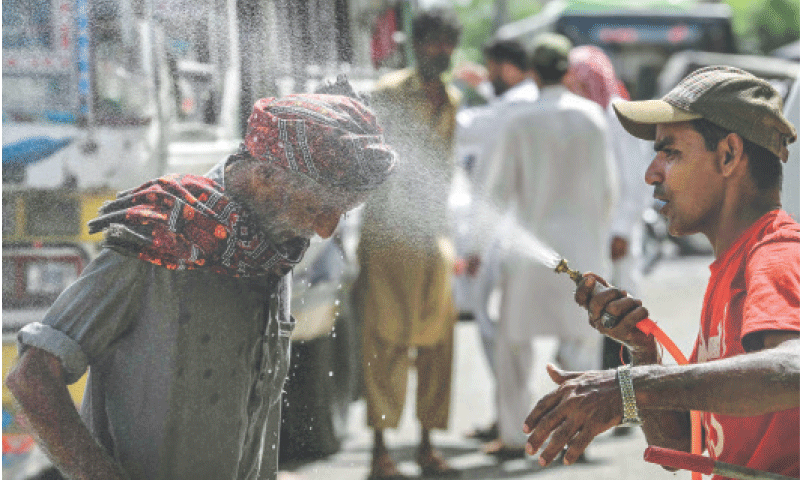
Karachi residents endured extreme weather conditions on Wednesday as the city’s “feels-like” temperature climbed to a scorching 54°C, despite the actual maximum temperature being recorded at 37.4°C, according to the Pakistan Meteorological Department.
Weather data showed that the apparent temperature steadily increased during the afternoon, rising from 49°C at around 1pm to 54°C by 3pm. High humidity levels contributed significantly to the oppressive conditions, with relative humidity recorded at 79 per cent in the morning and 65 per cent in the evening. The minimum temperature remained at 30°C.
Several districts across Sindh experienced even harsher conditions. Jacobabad emerged as the hottest location in the province, recording a temperature of 49.5°C. Dadu followed closely at 49°C, while Paddidan and Sukkur registered 47°C. Temperatures in Mohenjo Daro, Larkana, and Shaheed Benazirabad reached 46.5°C, while Rohri, Khairpur, and Sakrand recorded 46°C, 45.5°C, and 45°C respectively.
Chief Meteorologist Ameer Hyder Laghari said some relief is expected after Friday as the high-pressure system affecting the region gradually weakens. He noted that temperatures in Karachi are likely to decline to between 34°C and 36°C in the coming days. However, there is currently no forecast for rainfall in the city.
He also recalled that Karachi’s highest temperature ever recorded in June was 47°C on June 18, 1979.
Health experts have urged the public to take precautionary measures to avoid heat-related illnesses. Dr Nadeemullah Khan, Professor and Chair of the Department of Emergency Medicine at Aga Khan University Hospital, stressed that staying hydrated is one of the most effective ways to protect against extreme heat.
He advised people to drink plenty of water and avoid sugary beverages, caffeinated drinks, tea, coffee, and alcohol, as these can accelerate dehydration. He also recommended limiting outdoor activities during peak heat hours and seeking shelter in air-conditioned or cooler environments whenever possible.
Dr Khan warned that fans alone may not provide sufficient protection when outdoor temperatures exceed body temperature. He added that individuals wearing heavy protective equipment or dark clothing should exercise extra caution, as such attire increases heat absorption.
The expert also highlighted the importance of protecting vulnerable groups, particularly children and older adults. Children should never be left inside parked vehicles, as temperatures can rise to dangerous levels within minutes. Outdoor play and sports activities should be scheduled during the early morning or evening hours, with regular water breaks.
Older adults face a higher risk during heatwaves due to reduced ability to regulate body temperature and underlying health conditions. Dr Khan urged families and community members to check regularly on elderly individuals, especially those living alone or without access to proper ventilation and cooling facilities.
As the heatwave continues, authorities have advised residents to remain indoors during the hottest parts of the day, stay hydrated, and seek medical attention if symptoms of heat exhaustion or heatstroke develop.